Welcome to the power of walk
A happier, healthier horse begins in the most overlooked gait of all.
Yes, it's walk. But not the way you've been taught.
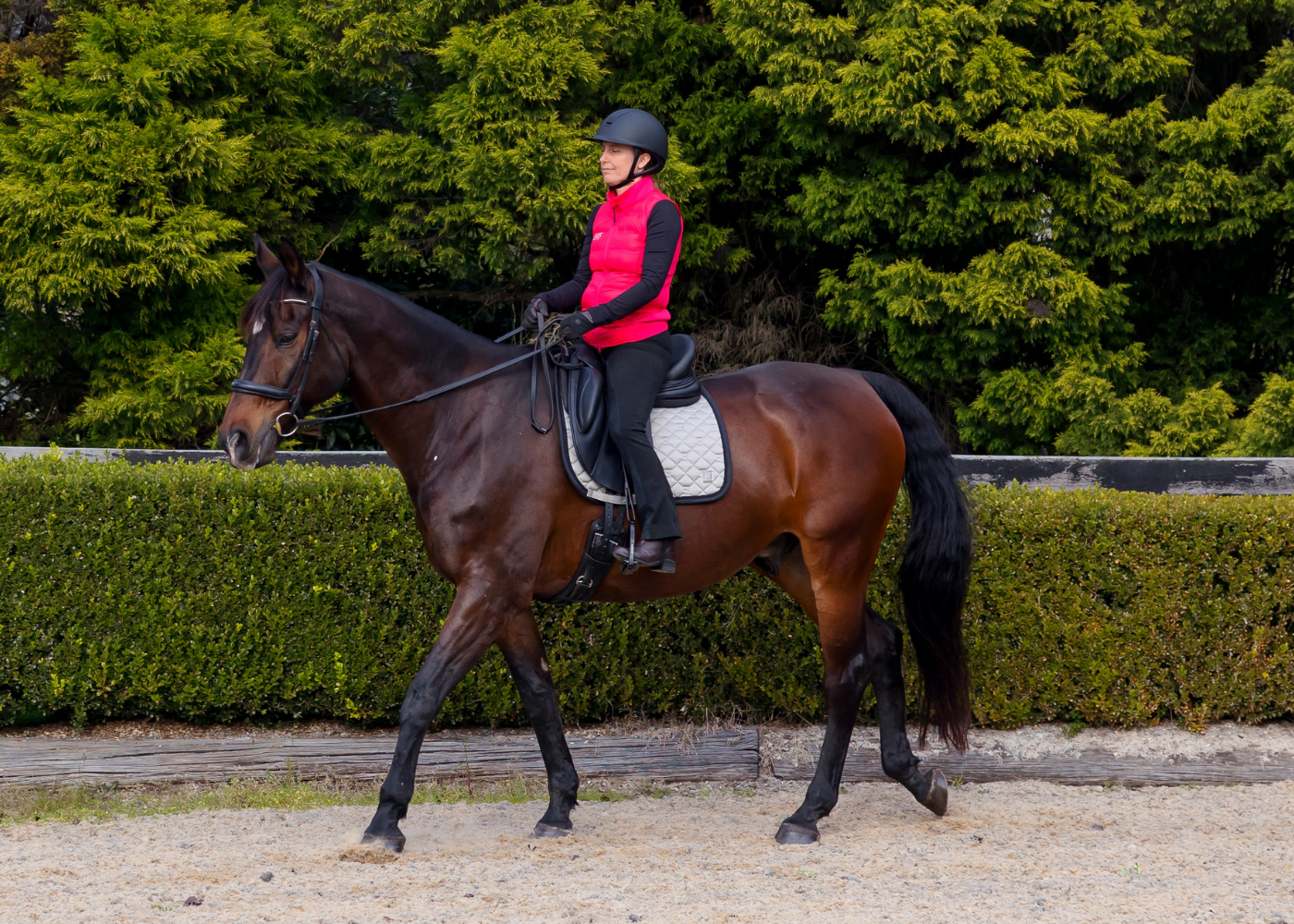

You've done everything right. So why doesn’t it feel better than this?
You have been riding for years, perhaps decades. You have worked with good trainers, explored different systems, read the books, taken the courses. You care about doing things well.
And yet something remains unresolved.
The rides often feel like work. You find yourself correcting, organising, managing. Nothing is dramatically wrong. The job gets done. But it does not feel like the partnership you once imagined. At times it feels more like negotiation than conversation.
Perhaps your horse feels slightly stiffer than he once did. Perhaps a little less willing. Nothing that alarms the vet. Nothing that demands a clear diagnosis. Just small shifts that are easy to explain away, and harder to ignore once you notice them.
Underneath it all is a quieter question: is there a better way to do this?
There is. And it begins in a place most modern training has reduced to a warm-up.
The wisdom modern training diluted
The great classical horsemen disagreed on many things, but they agreed on this: the walk is the foundation of everything.
Gustav Steinbrecht described it as the basis of correct training. François Baucher regarded it as the truest measure of equilibrium. Colonel Alois Podhajsky insisted it be developed with particular care. Nuno Oliveira called it the mother of all gaits.
They were not romantics. They were practical horsemen who spent their lives studying how horses balance and how harmony is built.
They understood that the walk reveals posture without disguise. It exposes imbalance. It shows whether the back is truly lifting or merely appearing to. It is the one pace where the horse can reorganise his body without momentum masking compensation.
Over time, the pressure to produce visible results pushed the walk into the background. It became preparation or recovery rather than the place where training actually begins.
Slow Walk Work restores it to its original role. It is not about doing less. It is about rebuilding balance at the one gait where genuine change can occur without force.
When the walk changes, everything else follows.
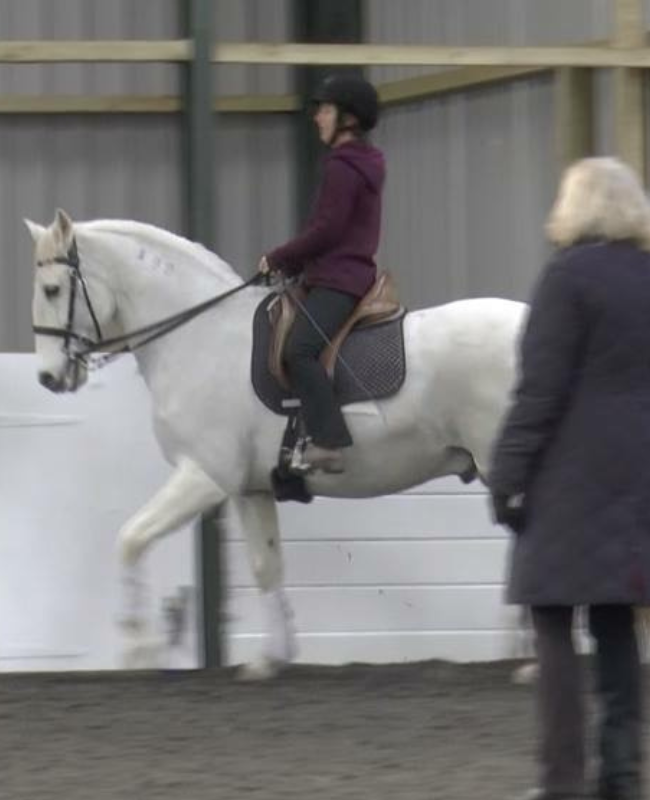
"For the first time, riding stopped feeling like something I did to my horse and started feeling like something we were creating together."
In my twenties I was doing everything correctly. I studied, qualified, and worked in riding centres across the UK. By every external measure I was successful.
But the harmony I had imagined was not consistently there. I relied heavily on my legs and hands. I could produce results, yet something felt missing. And beneath my own frustration was a question I did not want to examine too closely: was this truly good for my horses?
Two experiences changed my direction.
The first was discovering Heather Moffett and the French classical technique known as School Walk. The second was the time I spent with my Icelandic horse, Svalur, when I chose to slow our training down and remain in walk longer than felt efficient.
As we worked in careful, connected walk, his balance began to reorganise. His topline strengthened. His movement became freer. These changes carried into every gait. We later went on to win the British Championship together, but the title was not the real transformation.
The real shift was that riding no longer felt like something I was doing to him. It felt like something we were building together.
That difference was unmistakable. It was visible in his body and in his expression. It was the partnership I had been searching for, and it had been waiting in the walk all along.
This is what I teach in The Power of Walk.
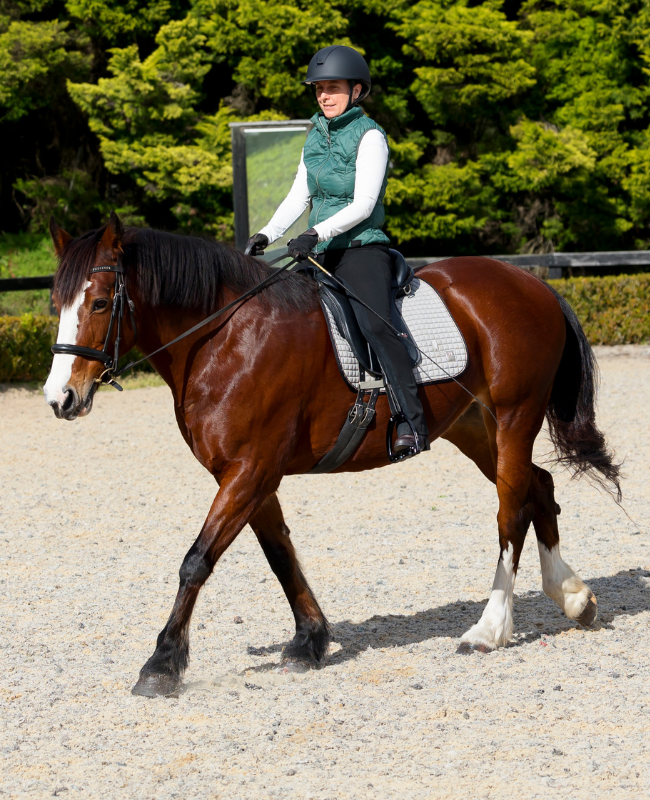
Imagine this...
You walk down to the field and your horse looks up and chooses to walk towards you.
You tack up without that familiar tension and worry. You ask him to walk on and he steps forward freely, not pushed but balanced.
As you ride, you notice you are doing less. Your aids feel lighter. He feels organised rather than managed. The work flows without constant correction.
Afterwards, he stands quietly beside you. His eye is soft. He is comfortable in his body.
This is not a fantasy. It is what happens when posture and balance are rebuilt at their foundation.
I'M READY — JOIN THE POWER OF WALKTHE PROOF IS IN THE HORSES
Case Studies
Words can describe this work. Photos show you what it actually does.
The before and after images below are from horses Diana has worked with directly, documented over years of slow walk work. Different breeds, different ages, different challenges. The same simple approach, and the same profound results.

Rocky - a 26 year old pony with Cushings
Rocky, a twenty-six-year-old pony with Cushing’s and muscle wastage, developed a dipped back and kissing spines. Through structured in-hand walk sessions three times per week for one month, his thoracic sling lifted, his back straightened and his topline rebuilt. He went on to live comfortably and soundly for several more years, finishing his life strong and at ease in his body.
Trevor - an 11 year old Thoroughbred ex-racehorse
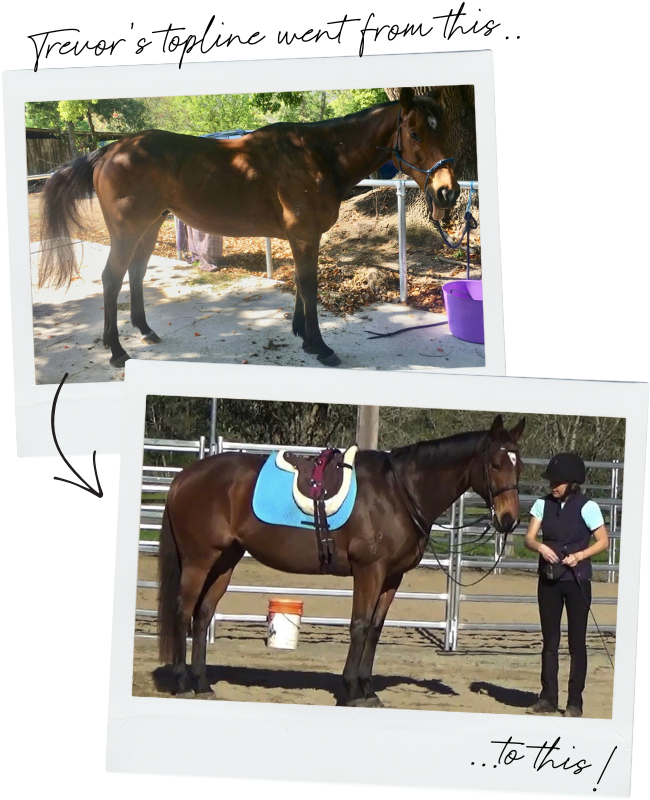
Trevor had an underdeveloped topline, an overdeveloped underneck and a hollow, tense way of going. Working with slow in-hand walk work his posture began to transform. After several months of building topline purely in walk he became markedly more forward, responsive and fluid in all gaits.
Flicker - a young Arab mare
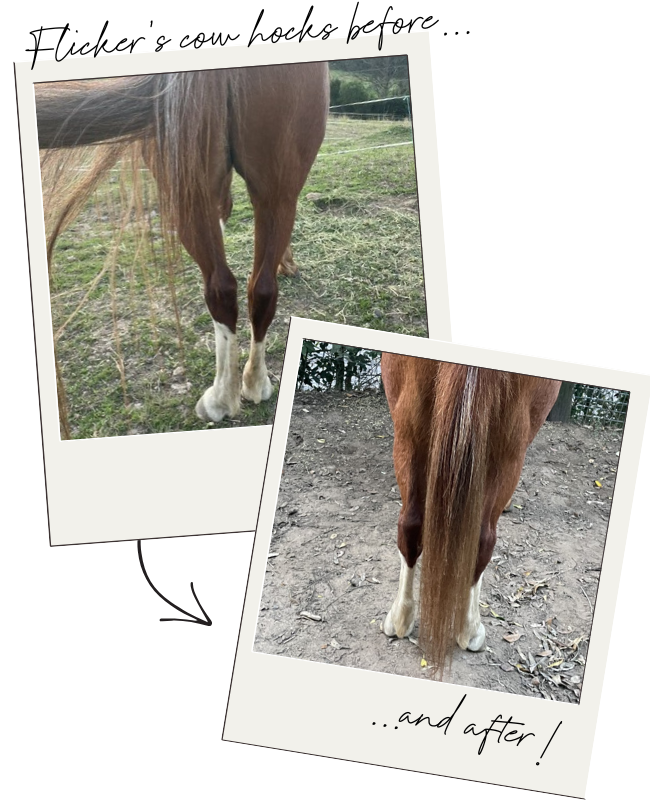
Flicker had developed crookedness and compensatory patterns that affected her movement and comfort. Working for around twenty minutes up to three times a week she softened through her neck, lifted her thoracic sling and aligned her body. The photos show the change in her straightness and topline over a period of just one month.
THIS IS FOR YOU IF
You've spent years doing what you were taught and still sense something is missing.
You care about your horse’s wellbeing as much as your own riding.
You are willing to slow down in order to create change that lasts.
It is also for you if you are bringing a horse back from injury, managing an older horse, or temporarily unable to ride. The in-hand work alone can create profound improvements in posture and comfort.
On the other side of this work is a horse who moves more freely and a ride that feels lighter and more cooperative. More importantly, it offers the reassurance that your training is supporting your horse’s body rather than working against it.
As Featured In:




INSIDE THE POWER OF WALK
Everything you need. Nothing you don't.
The Power of Walk is a ten-week online course teaching the Slow Walk Work method in a clear progression.
You begin in-hand, learning how to observe posture accurately and influence alignment without force. The principles are then carried into ridden work so that every gait reflects the balance developed at walk.
Each lesson is practical and focused. You will know what to look for, what to feel, and how to adjust. Most riders work for around twenty minutes three times per week and begin noticing meaningful changes within the first few weeks.
You receive lifetime access to the complete course, including demonstrations, guided practices, the Training the Eye bonus mini-course and troubleshooting resources.
YOURS WHEN YOU JOIN
The complete course, yours for life
When you join The Power of Walk you receive the complete ten week course with lifetime access to all materials, including the full step-by-step in-hand and ridden progression, all demonstrations and guided practices, and clear explanations of what to look for and how to adjust as you go.
You also receive the Training the Eye bonus mini-course and additional troubleshooting guidance for whenever you need extra support. The course is entirely self-led, so you work at the pace that suits you and your horse, returning to any lesson whenever you need it.
Full ten week course with lifetime access Training the Eye bonus mini-course Course extras and troubleshooting guidance. All demonstrations and guided practices.
$349 Start today. Lifetime access.STILL NOT SURE?
Caution makes sense
That caution makes sense. Many riders arrive having invested in other approaches that delivered only partial improvement.
Slow Walk Work does not rely on promises. It relies on observable change. When a horse becomes more comfortable, his posture shifts. His movement softens. His expression alters.
You will see it.
WANT TO KNOW MORE?
Frequently asked questions
DO I NEED ACCESS TO A HORSE TO DO THE COURSE?
WILL THERE BE ANY LIVE COACHING OR GROUP SESSIONS?
CAN I CONTINUE MY USUAL ACTIVITIES WITH MY HORSE WHILE TAKING THE COURSE?
WHAT DO I NEED TO PARTICIPATE IN THE COURSE?
CAN I SHARE THE COURSE WITH MY FRIENDS?
IS THIS COURSE USEFUL IF NOTHING FEELS OBVIOUSLY “WRONG”?
DO I NEED TO BE AT A PARTICULAR LEVEL OR DISCIPLINE TO JOIN?
IS THIS ONLY ABOUT THE WALK, OR WILL IT HELP OTHER GAITS TOO?
WHAT IF I GET STUCK OR FEEL UNSURE?
HOW MUCH TIME DO I NEED EACH WEEK?
DO I NEED EXPERIENCE WITH IN-HAND WORK?
HOW IS THIS DIFFERENT FROM OTHER TRAINING OR COURSES I’VE DONE?
IS THIS SUITABLE FOR OLDER HORSES, YOUNGER HORSES, OR HORSES COMING BACK FROM TIME OFF?
HOW LONG WILL I HAVE ACCESS TO THE COURSE MATERIALS?
WHAT EQUIPMENT DO YOU RECOMMEND?
As Featured In:
One last thing
If you have ever untacked after a ride feeling that something still was not quite right, you already know why this matters.
Harmony is not a gift reserved for the naturally talented. It is the result of balance built carefully at the foundation.
And it begins in walk.
JOIN THE POWER OF WALK — $349NOT READY TO JOIN THE COURSE YET?
Get The Free Slow Walk Work Starter Guide
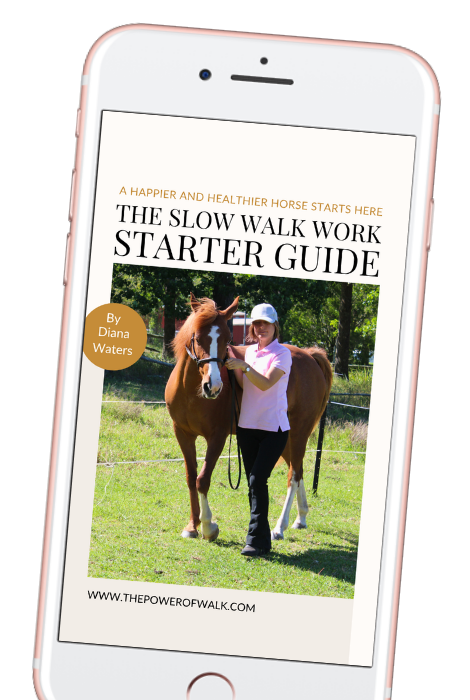
Start with the free Slow Walk Work Starter Guide. Simple in-hand techniques you can try in under twenty minutes. This is where the journey begins.
GET YOUR FREE COPY